

New 2025 Latest Questions 8011 Dumps - Use Updated PRMIA Exam
Latest 8011 Exam Dumps PRMIA Exam from Training Expert PassLeader
PRMIA 8011 Credit and Counterparty Manager (CCRM) Certificate Exam is a comprehensive exam that covers a wide range of topics related to credit and counterparty risk management. 8011 exam is divided into six sections, each of which covers a specific area of credit and counterparty risk management. The sections include credit risk management, counterparty risk management, credit analysis, credit portfolio management, credit risk modeling, and legal and regulatory issues. 8011 exam is designed to test candidates' knowledge of these topics and their ability to apply this knowledge to real-world situations.
To be eligible for the PRMIA 8011 certification exam, candidates must have at least two years of professional experience in credit and risk management or a related field. 8011 exam is computer-based and consists of 100 multiple-choice questions that must be completed within three hours. Candidates who pass the exam receive a certificate that demonstrates their knowledge and expertise in credit and counterparty risk management, as well as membership in the PRMIA community of risk management professionals.
NEW QUESTION # 157
What ensures that firms are not able to selectively default on some obligations without being considered in default on the others?
- A. Exchange listing requirements
- B. Cross-default clauses in debt covenants
- C. Chapter 11 regulations
- D. The bankruptcy code
Answer: B
Explanation:
It is the cross-default clauses in debt agreements that generally provide that a default on one obligation is considered a credit event applying to all debts of the obligor, and therefore we are able to deal with credit risk at the borrower level, and not at the level of the individual security. It also helps avoid situations where borrowers can selectively default on some obligations while continuing to service others. Therefore Choice 'a' is the correct answer. The other choices are incorrect.
NEW QUESTION # 158
The results of 'desk-level' stress tests cannot be added together to arrive at institution wide estimates because:
- A. Desk-level stress tests focus on desk specific risks that may be minor or irrelevant in the larger scheme at the institution level.
- B. Desk-level stress tests tend to ignore higher level risks that are relevant to the institution but completely outside the control of the individual desks.
- C. Desk-level stress tests tend to focus on extreme movements in risk parameters (such as volatility) without considering economy wide scenarios that may represent more realistic and consistent situations for the institution.
- D. All of the above
Answer: C
Explanation:
All the above listed reasons are valid explanations as to why an institution level stress test cannot be estimated by merely summing up the results of the stress tests of the individual desks.
NEW QUESTION # 159
An assumption of normality when returns data have fat tails leads to:
I. underestimation of VaR at high confidence levels
II. overestimation of VaR at low confidence levels
III. overestimation of VaR at high confidence levels
IV. underestimation of VaR at low confidence levels
- A. II, III and IV
- B. I, II and III
- C. I and II
- D. I, II, III and IV
Answer: C
Explanation:
When returns are non-normal and have fat tails, an assumption of normality in returns leads to underestimation of VaR at high confidence levels. At the same time, at lower confidence levels the normal distribution may give higher VaR estimates. Therefore Choice 'a' is correct. The other choices are incorrect.
Also refer to the tutorial about VaR and heavy tails.
NEW QUESTION # 160
Which of the following are considered asset based credit enhancements?
I. Collateral
II. Credit default swaps
III. Close out netting arrangements
IV. Cash reserves
- A. II and IV
- B. I and III
- C. I and IV
- D. I, II and IV
Answer: B
Explanation:
Credit enhancements come in two varieties: counterparty based, where the exercise of the credit enhancement requires a third party to pay, and this includes guarantees and CDS contracts. Asset based credit enhancements are based upon a physical asset in possession, and these include collateral and balances owed on other trades or transactions, and availed through close out netting arrangements.
Of the listed choices, I and III are asset based credit enhancements, and II is third party based. Cash reserves are not credit enhancements (unless held as collateral).
NEW QUESTION # 161
Which of the following is not true about the ISDA master agreement (ISDA MA):
- A. The ISDA MA describes events of default, and termination events
- B. The ISDA MA describes the close out process
- C. The CSA (Credit Support Annex) is one of the parts of the ISDA MA
- D. All transactions under the ISDA MA are considered separate obligations
Answer: D
Explanation:
The ISDA MA provides a template that can be used by market participants to document derivative transactions. It has a core section that applies always, and various schedules that can be agreed to by the parties. The ISDA MA considerably facilitates closing transactions once the ISDA MA has been has been negotiated, without requiring a renegotiation each time.
A key feature of the ISDA MA is that it binds all transactions into a single net obligation. The ISDA Master
2002 states that "All transactions are entered into in reliance on the fact that this Master Agreement and all Confirmations form a single agreement between the parties ... and the parties would not otherwise enter into any Transactions." Therefore transactions under the ISDA MA are not considered separate obligations.
The ISDA MA does indeed define close out processes, default and termination events, and the CSA is one of the parts of the MA that describes the collateral related agreement.
NEW QUESTION # 162
Which of the following is a valid approach to determining the magnitude of a shock for a given risk factor as part of a historical stress testing exercise?
I. Determine the maximum peak-to-trough change in the risk factor over the defined period of the historical event II. Determine the minimum peak-to-trough change in the risk factor over the defined period of the historical event III. Determine the total change in the risk factor between the start date and the finish date of the event regardless of peaks and troughs in between IV. Determine the maximum single day change in the risk factor and multiply by the number of days covered by the stress event
- A. II and IV
- B. I and III
- C. I, II and IV
- D. IV only
Answer: B
Explanation:
Stress events rarely play out in a well defined period of time, and looking back it is always difficult to put exact start and end dates on historical stress events. Even after that is done, the question arises as to what magnitude of a change in a particular risk factor (for example interest rates, spreads, or exchange rates) are reasonable to consider for the purposes of the stress test.
Statements I and III correctly identify the two approaches that are acceptable and used in practice - the risk manager can either take the maximum adverse move - from peak to trough - in the risk factor, or alternatively he or she could consider the change in the risk factor from the start of the event to the end as defined for the purposes of the stress test. Between the two, the approach mentioned in statement III is considered slightly superior as it produces more believable shocks.
Statement II is incorrect because we never want to consider the minimum, and statement IV is not correct as it is likely to generate a shock of a magnitude that is not plausible. Therefore Choice 'b' is the correct answer.
NEW QUESTION # 163
Which of the following is true in relation to the application of Extreme Value Theory when applied to operational risk measurement?
I. EVT focuses on extreme losses that are generally not covered by standard distribution assumptions II. EVT considers the distribution of losses in the tails III. The Peaks-over-thresholds (POT) and the generalized Pareto distributions are used to model extreme value distributions IV. EVT is concerned with average losses beyond a given level of confidence
- A. II and III
- B. I and IV
- C. I, II and IV
- D. I, II and III
Answer: D
Explanation:
EVT, when used in the context of operational risk measurement, focuses on tail events and attempts to build a distribution of losses beyond what is covered by VaR. Statements I, II and II are correct. Statement IV describes conditional VaR (CVAR) and not EVT.
Choice 'c' is the correct answer.
NEW QUESTION # 164
Which of the following is not an event of default covered in the ISDA Master Agreement?
I). failure to pay or deliver
II). credit support default
III). merger without assumption
IV). Bankruptcy
- A. II and III
- B. All are considered events of default
- C. I
- D. IV
Answer: C
Explanation:
Note that events of default under the ISDA MA are caused by one of the parties that is considered 'at fault'. In contrast, "termination events" are events for which no one is at fault, for example changes in legislation, illegality etc that still justify termination of the transactions under the contract.
The ISDA MA describes the following 8 types of events of default:
1. failure of pay or deliver
2. breach of agreement
credit support default
4. misrepresentation
5. default under specified transaction
6. cross default
7. bankruptcy
8. merger without assumption
All of the options presented in the question are events of default.
NEW QUESTION # 165
For a hypotherical UoM, the number of losses in two non-overlapping datasets is 24 and 32 respectively. The Pareto tail parameters for the two datasets calculated using the maximum likelihood estimation method are 2 and 3. What is an estimate of the tail parameter of the combined dataset?
- A. 2.23
- B. 2.57
- C. 0
- D. Cannot be determined
Answer: B
Explanation:
For a number of processes, including many in finance, while a distribution such as the normal distribution is a good approximation of the distribution near the modal value of the variable, the same normal distribution may not be a good estimate of the tails. For this reason, the Pareto distribution is one of the distributions that is often used to model the tails of another distribution. Generally, if you have a set of observations, and you discard all observations below a threshold, you are left with what are called 'exceedances'. The threshold needs to be reasonably far out in the tail. If from each value of the exceedances you subtract the threshold value, the resulting dataset is estimated by the generalized Pareto distribution.
A mathematical equation with black text Description automatically generated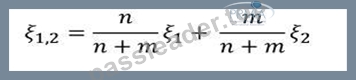
The Pareto distribution has a 'shape parameter'. The average of two Pareto distributions with tail parameters#1 and#2 (#is a Greek character, pronounced as 'sai' (saa-eee)), is the weighted average of#1 and#2 with weights proportional to the number of observations in the datasets underlying the distributions.
NEW QUESTION # 166
Financial institutions need to take volatility clustering into account:
I. To avoid taking on an undesirable level of risk
II. To know the right level of capital they need to hold
III. To meet regulatory requirements
IV. To account for mean reversion in returns
- A. II, III and IV
- B. I, II and III
- C. I, II and IV
- D. I & II
Answer: D
Explanation:
Volatility clustering leads to levels of current volatility that can be significantly different from long run averages. When volatility is running high, institutions need to shed risk, and when it is running low, they can afford to increase returns by taking on more risk for a given amount of capital. An institution's response to changes in volatility can be either to adjust risk, or capital, or both. Accounting for volatility clustering helps institutions manage their risk and capital and therefore statements I and II are correct.
Regulatory requirements do not require volatility clustering to be taken into account (at least not yet).
Therefore statement III is not correct, and neither is IV which is completely unrelated to volatility clustering.
NEW QUESTION # 167
Which of the following statements are true:
I. A transition matrix is the probability of a security migrating from one rating class to another during its lifetime.
II. Marginal default probabilities refer to probabilities of default in a particular period, given survival at the beginning of that period.
III. Marginal default probabilities will always be greater than the corresponding cumulative default probability.
IV. Loss given default is generally greater when recovery rates are low.
- A. I and III
- B. I, III and IV
- C. I and IV
- D. II and IV
Answer: D
Explanation:
Statement I is incorrect. A transition matrix expresses the probabilities of moving to a given set of ratings at the end of a period (usually one year) conditional upon a given rating at the beginning of the period. It does not make a reference to an individual security and certainly not to the probability of migrating to other ratings during its entire lifetime.
Statement II is correct. Marginal default probabilities are the probability of default in a given year, conditional upon survival at the beginning of that year.
Statement III is incorrect. Cumulative probabilities of default will always be greater than the marginal probabilities of default - except in year 1 when they will be equal.
Statement IV is correct. LGD = 1 - Recovery Rate, therefore a low recovery rate implies higher LGD.
NEW QUESTION # 168
For a bank using the advanced measurement approach to measuring operational risk, which of the following brings the greatest 'model risk' to its estimates:
- A. Insufficient number of simulations when building the loss distribution
- B. Choice of an incorrect distribution for loss event frequencies
- C. Aggregation risk, from selecting an incorrect value of estimated correlations between different operational risk estimates
- D. Choice of incorrect parameters for loss severity distributions
Answer: C
Explanation:
The greatest model risk when calculating operational risk capital comes from incorrect assumptions about correlations between different operational risks for which standalone risk calculations have been made.
Generally, the correlation can be expected to be positive, and would therefore vary between 0 and 1. These two values determine the 'bounds' between which the total operational risk capital would lie, and these bounds are generally quite far apart. Therefore the total value of the operational risk capital is very sensitive to the value chosen for the correlation, and this is the source of the biggest model risk under the AMA.
NEW QUESTION # 169
As the persistence parameter under GARCH is lowered, which of the following would be true:
- A. High variance from the recent past will persist for longer
- B. The model will react slower to market shocks
- C. The model will give lower weight to recent returns
- D. The model will react faster to market shocks
Answer: D
Explanation:
The persistence parameter, #, is the coefficient of the most recent day's returns in GARCH calculations. A higher value of the persistence parameter tends to 'persist' the prior value of variance for longer. Consider an extreme example - if the persistence parameter is equal to 1, the variance under GARCH will never change in response to returns.
A white text with black text Description automatically generated
NEW QUESTION # 170
A corporate bond maturing in 1 year yields 8.5% per year, while a similar treasury bond yields 4%. What is the probability of default for the corporate bond assuming the recovery rate is zero?
- A. 4.50%
- B. 4.15%
- C. 8.50%
- D. Cannot be determined from the given information
Answer: B
Explanation:
The probability of default would make the future cash flows from both the bonds identical. If p be the probability of default, the cash flows from the risky corporate bond would be
= (cash flows in the event of default x probability of default) + (cash flows without default x (1 - probability of default))
=> p*0 + (1 - p)*(1 + 8.5%) = (1 - p)*1.085.
The cash flows from the treasury bond would be 1.04. These two should be equal, ie,
1.04 = (1- p)*1.085, implying p = 4.15%.
(Note: The above is a simplification intended for the exam. In reality investors would demand a 'credit risk premium' for the corporate bond over and above the expected default loss rate. They are unlikely to be happy with just being compensated with exactly the expected default loss rate plus the risk-fre rate because the expected default loss rate itself is uncertain. They would demand some premium over and above what the default rate alone might mathematically imply above the risk free rate. In this question, this credit risk premium is ignored.)
NEW QUESTION # 171
An error by a third party service provider results in a loss to a client that the bank has to make up. Such as loss would be categorized per Basel II operational risk categories as:
- A. Abnormal loss
- B. Execution delivery and process management
- C. Business disruption and process failure
- D. Outsourcing loss
Answer: B
Explanation:
Choice 'a' is the correct answer. Refer to the detailed loss event type classification under Basel II (see Annex 9 of the accord). You should know the exact names of all loss event types, and examples of each.
NEW QUESTION # 172
Which of the following statements are true in relation to the current state of the financial network?
I. Interconnectivity between countries has reduced while that between institutions in the same country has increased significantly II. The degrees of separation between institutions has gone up III. The average path length connecting any two given institutions has shrunk IV. Knife-edge dynamics imply that systemic risk arises from the financial system flipping from risk sharing to risk spreading
- A. II and III
- B. III and IV
- C. I and IV
- D. I and II
Answer: B
Explanation:
Over the past decade or so, systemic risk has been increased by vastly increasing network complexities resulting from greater interconnectivity between institutions as well as countries. Therefore statement I is incorrect.
Statement II is incorrect and statement III is correct because the average path length between institutions, or their degree of separation where they are not directly dealing with each other but through other counterparties to which they are exposed (analogous to 6 degrees of separation, or the 'small world' property), has shrunk and not increased.
Statement IV correctly describes knife edge dynamics, which is another way of waying that the financial network displays a tipping point property.
NEW QUESTION # 173
A long position in a credit sensitive bond can be synthetically replicated using:
- A. a short position in a treasury bond and a short position in a CDS
- B. a long position in a treasury bond and a short position in a CDS
- C. a long position in a treasury bond and a long position in a CDS
- D. a short position in a treasury bond and a long position in a CDS
Answer: B
Explanation:
The correct answer is choice 'a'
A long position in a credit sensitive bond is equivalent to earning the risk free rate and the spread on the bond.
The risk free rate can be earned through a long position in a treasury bond, and the spread can be earned in the form of premiums on a CDS, which are received by the protectionseller, ie the party short a CDS contract.
Therefore we can get the same results as a long bond position using a combination of a long treasury bond and a short position in a CDS. Choice 'a' is the correct answer.
NEW QUESTION # 174
When pricing credit risk for an exposure, which of the following is a better measure than the others:
- A. Potential Future Exposure (PFE)
- B. Notional amount
- C. Mark-to-market
- D. Expected Exposure (EE)
Answer: D
Explanation:
Exposure for derivative instruments can vary significantly over the lifetime of the instrument, depending upon how the market moves. The potential future exposure represents the extremes, notthe most likely outcome.
The expected exposure is the most suitable measure for pricing the credit risk. Over time, as multiple transactions are entered into, the expectation (or the mean) will be realized - though individual transactions may have more or less by way of exposure.
The notional amount may not be relevant, though for loans it may be the most important contributor to the expected exposure. Mark-to-market will represent the exposure at a given point in time, but cannot be predicted nor be used to price the credit risk.
NEW QUESTION # 175
Which of the following correctly describes a reverse stress test:
- A. Stress tests that start from a known stress test outcome and then ask what events could lead to such an outcome for the bank
- B. A stress test that requires a role reversal between risk managers and the risk taking business units in order to determine credible scenarios
- C. A stress test that considers only qualitative factors that go beyond mathematical modeling to examine feedback loops and the effect of macro-economic fundamentals
- D. Stress tests that are prescribed and conducted by a regulator in addition to the tests done by a bank
Answer: A
Explanation:
Generally, stress tests consider a shock or a severe scenario in order to determine the 'what-if' that circumstance were to materialize. They focus on the outcome based upon a set of shocks. In a reverse stress test, the outcome is assumed to be known (generally something as severe as bankruptcy, non-compliance with capital requirements etc), and the test is intended to work out what shocks or events would lead to such an outcome.
Reverse stress tests therefore start from a known stress test outcome (such as breaching regulatory captial ratios, illiquidity or insolvency) and then asking what events could lead to such an outcome for the bank. This can be quite a challenging task. Principle 9 laid out in the BCBS document on stress testing (May 2009) (which is part of the PRM syllabus effective March 1, 2010) lays down the expectations relating to reverse stress tests.
Therefore Choice 'a' is the correct answer. All the other choices are nonsensical.
NEW QUESTION # 176
Which of the following is NOT true in respect of bilateral close out netting:
- A. Transactions are separated by transaction type and immediately settled separately at each's replacement value
- B. All transactions are immediately closed out upon the occurrence of a credit event for either of the counterparties
- C. All transactions are netted against each other
- D. The net amount due is immediately receivable or payable
Answer: A
Explanation:
Choice 'b', Choice 'c' and Choice 'a' correctly describe a bilateral close out netting as recommended by the ISDA. However Choice 'd' is not correct as it suggests individual settlement of transactions without netting which is the whole point of bilateral close out netting.
NEW QUESTION # 177
Which of the following statements is true in respect of a non financial manufacturing firm?
I. Market risk is not relevant to the manufacturing firm as it does not take proprietary positions II. The firm faces market risks as an externality which it must bear and has no control over III. Market risks can make a comparative assessment of profitability over time difficult IV. Market risks for a manufacturing firm are not directionally biased and do not increase the overall risk of the firm as they net to zero over a long term time horizon
- A. III only
- B. III and IV
- C. I and II
- D. IV only
Answer: A
Explanation:
A non-financial firm such as a manufacturing company faces market risks similar to those faced by financial firms, except perhaps for not being exposed to risks from the equity markets. Non financial firms commonly face interest rate risks in respect of their debts, commodity price risks in respect of their inputs and products, and foreign currency risks in respect of their overseas operations. It is therefore not correct to say that the manufacturing firm does not face market riskbecause it does not take proprietary positions. While decisions on positions may not be actively taken, positions in foreign exchange (eg, through overseas debtors owing foreign currency, or liabilities in foreign currencies to overseas suppliers), commodities (through exposure to the need for raw material and inventory of finished goods) and interest rates (through debt financed, whether at fixed or floating rates) exist and create market risk much in the same way as they would for a proprietary position. Therefore statement I is incorrect.
While the firm faces market risks as an externality (as do financial firms for that matter, though often they seek such exposure to profit from their view on which way the externality will express itself), it is incorrect to say that these risks must be borne. They can be measured and hedged. Therefore statement II is incorrect.
The results of a manufacturing firm will include gains and losses arising from exposure to market risk, and will cloud the true profitability of the business. A firm with significant unhedged overseas sales may show vastly different results across time periods due to the FX gains and losses, making comparative assessment of profitability difficult. Therefore statement III is correct.
Market risks for a manufacturing firm may be directionally biased in terms of exposure, ie there may be a consistent 'long' position in a particular commodity that the firm produces, and a consistent 'short' position in the commodities consumed. In the same way, directional biases may exist in FX or interest rate exposures too.
Regardless of the bias, the existence of market risk exposures increase the volatility of the income stream and make the firm more risky, even though the long term expected returns from such exposures is zero (ie, returns may be zero but standard deviation is not). Therefore statement IV is not correct as market risks form non financial firms do increase the overall risk of the firm.
NEW QUESTION # 178
When compared to a medium severity medium frequency risk, the operational risk capital requirement for a high severity very low frequency risk is likely to be:
- A. Unaffected by differences in frequency or severity
- B. Lower
- C. Higher
- D. Zero
Answer: D
Explanation:
High frequency and low severity risks, for example the risks of fraud losses for a credit card issuer, may have high expected losses, but low unexpected losses. In other words, we can generally expect these losses to stay within a small expected and known range. The capital requirement will be the worst case losses at a given confidence level less expected losses, and in such cases this can be expected to be low.
On the other hand, medium severity medium frequency risks, such as the risks of unexpected legal claims, 'fat- finger' trading errors, will have low expected losses but a high level of unexpected losses. Thus the capital requirement for such risks will be high.
It is also worthwhile mentioning high severity and low frequency risks - for example a rogue trader circumventing all controls and bringing the bank down, or a terrorist strike or natural disaster creating other losses - will probably have zero expected losses & high unexpected losses but only at very high levels of confidence. In other words, operational risk capital is unlikely to provide for such events and these would lie in the part of the tail that is not covered by most levels of confidence when calculating operational risk capital.
Note that risk capital is required for only unexpected losses as expected losses are to be borne by P&L reserves. Therefore the operational risk capital requirements for a low severity high frequency risk is likely to be low when compared to other risks that are lower frequency but higher severity.
Thus Choice 'c' is the correct answer.
NEW QUESTION # 179
......
Updated Test Engine to Practice 8011 Dumps & Practice Exam: https://www.passleader.top/PRMIA/8011-exam-braindumps.html
Pass PRMIA 8011 PDF Dumps Recently Updated 330 Questions: https://drive.google.com/open?id=1TcnR2agJ4JKdic1n0tNjLVN19Z8Ah90a